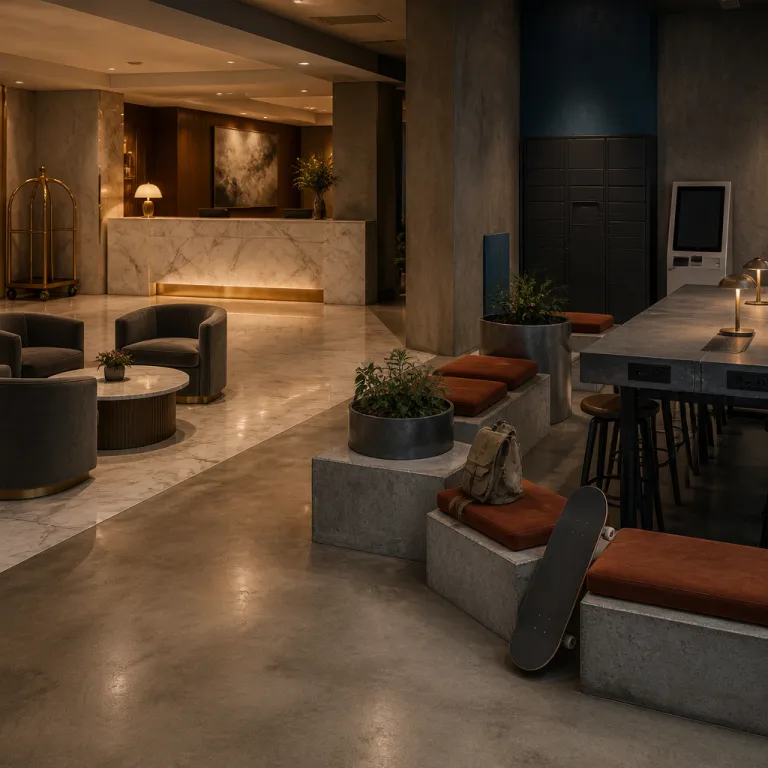
Gen Z is not impressed by your chandelier
Gen Z arrives at a five star hotel and walks straight past the lobby spectacle. For this cohort, gen z luxury hotel preferences hospitality 2026 are defined less by marble and more by how fast the Wi Fi connects, how intuitive the mobile check process feels, and whether the first staff interaction sounds human rather than scripted. For Indian gen travelers used to seamless digital payments and hyper responsive apps, a ten minute queue at reception is not a charming ritual, it is a sign that luxury hospitality has not been paying attention.
Across the hospitality industry, senior managers still design lobbies as stages where guests perform arrival theatre. Gen guests instead treat this space as a transient zone in the guest journey, a place to scan a QR code, check social media, maybe grab a cold brew before heading to a co working style lounge that feels more local and less ceremonial. When you evaluate luxury hotels for your next stay, watch how the hotel handles that first five minutes, because gen expects frictionless movement from car door to room, not a lecture on the brand heritage.
For Indian luxury travel planners, this generational split matters because you often travel as mixed age families. Gen travellers in their twenties want experiences that feel light, flexible, and quietly efficient, while parents may still enjoy the old school welcome with flower garlands and a slow towel ritual. The smartest hospitality brands now run parallel scripts, letting each guest choose their own arrival experience, which is where gen preferences start to reshape how service, design, and staffing are allocated in both city hotels and coastal hotels resorts.
Look closely at how a hotel uses its lobby square metres. Some luxury hotels still devote vast space to unused seating, while younger gen travel patterns show guests prefer compact arrival zones and larger, more adaptive lounges where work, play, and dining blur. When a hotel insists that luxury isn only about grandeur, you can safely assume the management has not spent enough time watching gen guests move through the property.
For you as a paying guest, the question is simple. Does the hotel treat the lobby as a museum or as a living, flexible platform for experiences gen travellers actually want during a modern stay. In practice, that means power outlets everywhere, acoustics that allow both quiet calls and social buzz, and staff trained to handle digital queries as gracefully as they pour Champagne.
Shorter trips, sharper choices: how Indian travellers are re writing luxury
Gen Z and younger millennials are slicing their annual leave into more frequent, shorter breaks. That shift, documented by hotel analysts tracking gen z luxury hotel preferences hospitality 2026, is colliding with older Indian guests who still plan one or two long, high value trips each year, creating a split demand pattern that every serious hotel should now understand. When you book your next hotel, you are stepping into this quiet tug of war between generations, and the winners are the brands that can serve both without diluting their identity.
For Indian gen travelers based in Mumbai, Bengaluru, or Delhi, rising airfares have nudged luxury travel toward drivable destinations like Alibaug, Coorg, or the Aravallis. That is why new luxury hotels and hotels resorts are appearing closer to metros, while palace style properties in remote locations must work harder to justify the journey with deeper experiences and more thoughtful service. This domestic tilt has already redrawn the economics of five star hospitality in India, as explored in detail in this analysis of how domestic travellers flipped the luxury market at India’s five star demand shift.
Gen travellers typically arrive with a tight, curated list of experiences they want from a stay. They care whether the hotel partners with local artisans, whether the spa uses Indian brands with clean formulations, and whether the concierge can arrange low impact experiences that ease climate anxiety rather than amplify it with wasteful spectacle. Older guests may still prioritise room size and butler formality, but gen expects a different balance where luxury isn only about square footage, it is about how intelligently that space supports work, rest, and play.
For you, this means interrogating how a hotel positions itself along this generational spectrum. Some hospitality brands, especially the grande dames, are doubling down on classic luxury hospitality with white glove service and multi course tasting menus, while newer gen brands lean into casual dining, flexible check in, and a more relaxed, social media aware tone. The most interesting properties now operate like hybrids, offering a quiet wing for traditional guests and a more animated, experience led wing for gen travel patterns that favour late night energy and early morning wellness.
India’s luxury pipeline reflects this split. New openings from global brands in Agra, Ayodhya, and Sikkim, mapped in the overview of how India’s luxury map is shifting, show how hospitality brands are betting on both pilgrimage circuits and nature led escapes to attract gen guests and their parents. When you choose between these hotels, you are really choosing which version of luxury hospitality you want to endorse with your wallet.
From marble to meaning: redefining luxury for the gen guest journey
Traditional luxury hotels were built around visible opulence, from onyx bathrooms to chandeliers the size of small apartments. Gen z luxury hotel preferences hospitality 2026 point in another direction, where meaning, context, and emotional resonance matter more than sheer spectacle, especially for gen travellers from India who have grown up with both global exposure and local pride. For them, luxury isn only about imported caviar, it is about a chef who can explain the provenance of single origin spices from Kerala as confidently as a sommelier describes a Burgundy.
When you evaluate a hotel, look beyond the room photos and ask how the property integrates local experiences into the guest journey. Does the hotel work with neighbourhood cafés, galleries, and guides, or does it keep guests sealed inside a climate controlled bubble that ignores the city outside. Gen preferences lean strongly toward porous boundaries, where the hotel acts as a curator of the local rather than a fortress against it, and that shift is quietly redefining luxury for everyone.
Service is where this redefinition becomes most visible. Gen guests value staff who can move fluidly between digital and physical touchpoints, answering a WhatsApp message about late checkout as gracefully as they plate a poolside breakfast, and they notice when a hotel’s brand training produces robotic replies instead of genuine comment and conversation. For you, this means paying attention to how a hotel responds to pre arrival emails or app messages, because that is often the clearest sign of whether the luxury hospitality promise extends beyond the lobby script.
Globally, the tension between lifestyle led hospitality brands and traditional grande dames is sharpening. The Ennismore style of hotels, from Morgans Originals to SLS and The Hoxton, treats social spaces, programming, and design as the core experience, while the Four Seasons or Mandarin Oriental model still centres on suites, service choreography, and culinary depth, as seen in the latest wave of new luxury openings to book. For Indian luxury travel planners, the choice between these models is no longer theoretical, it shapes whether your next stay feels like a private club, a design forward playground, or a quiet sanctuary.
As you plan, remember that experiences gen travellers cherish often cost less than the marble they replace. A sunrise walk with a naturalist who understands local ecology can ease climate anxiety more effectively than any scented candle, while a thoughtful turn down ritual using regional textiles and teas can feel more memorable than another generic chocolate. In the end, redefining luxury is not about rejecting comfort, it is about aligning every detail of the stay with values, context, and a sense of place that speaks to both gen travel instincts and the expectations of older guests.
Digital first, not digital only: how tech, loyalty, and climate anxiety reshape the stay
For gen Z, a hotel without strong digital infrastructure is simply not in the consideration set. Gen z luxury hotel preferences hospitality 2026 show that mobile check in, keyless entry, and app based service requests are now baseline expectations, not futuristic perks, especially for gen travelers who manage their entire travel life from a single smartphone. When you book, test the hotel’s app or web interface before committing, because clunky digital journeys often signal deeper operational gaps.
Yet digital should never become an excuse for weak human service. Gen guests are comfortable with chatbots for simple tasks, but they still expect a real person to resolve nuanced issues, from room allocation to dietary needs, and they notice when a hotel hides behind screens instead of training its équipe properly. The most sophisticated hospitality brands treat technology as a backstage enabler, using data to personalise the guest journey while keeping the front stage warm, attentive, and quietly efficient.
Loyalty is another area where generational fault lines are widening. Older guests often value points, tiers, and upgrades, while gen preferences lean toward flexible benefits, meaningful partnerships, and transparent sustainability commitments that address climate anxiety rather than greenwashing it away. When a brand’s loyalty programme feels like a maze of blackout dates and fine print, gen travellers simply opt out, preferring to book the hotel that aligns with their values instead of chasing status.
For Indian luxury travel planners, this means interrogating not just the room rate but the broader ecosystem of the brand. Does the hotel measure and publish its environmental données, invest in local hiring, and reduce waste in visible ways, or does it rely on vague sustainability statements that luxury isn able to back up with specifics. Experiences gen travellers respect tend to be those where the hotel’s sign of commitment is tangible, from refillable amenities to serious renewable energy investments.
Social media sits in the middle of all this, amplifying both excellence and missteps. A single guest comment about tone deaf service can travel fast across platforms, while a thoughtful gesture can turn into organic advocacy that no marketing budget can buy, especially when shared by influential gen brands and creators. For you, the practical takeaway is simple, use social media as a research tool, but trust your own priorities when choosing between hotels resorts, because the most meaningful luxury experience is the one that still feels quietly right when the phone is back in the safe.
Key figures reshaping generational luxury hospitality
- Analysts tracking global hotel performance report that younger travellers now take more trips per year than older cohorts, but with shorter average stays, which pushes luxury hotels to design experiences that deliver impact within two or three nights rather than a full week.
- Industry research on Indian domestic travel shows that the share of high end trips taken within driving distance of major metros has risen significantly compared with pre pandemic patterns, reflecting how rising airfares and climate anxiety are nudging gen travellers toward closer, more sustainable luxury options.
- Surveys of digital behaviour in hospitality indicate that a clear majority of gen Z and millennial guests prefer mobile check in and keyless room access when available, yet still rate responsive human service as a critical factor in overall satisfaction scores.
- Global loyalty programme data reveals that younger guests are less likely to engage with traditional points based schemes than older travellers, but more likely to choose a hotel brand that offers visible sustainability initiatives and flexible, experience led rewards.
- Benchmarking studies across the hospitality industry show that hotels which integrate local partnerships, community engagement, and transparent environmental reporting into their operations tend to achieve higher review scores among gen guests, even when their physical product is less opulent than older luxury competitors.