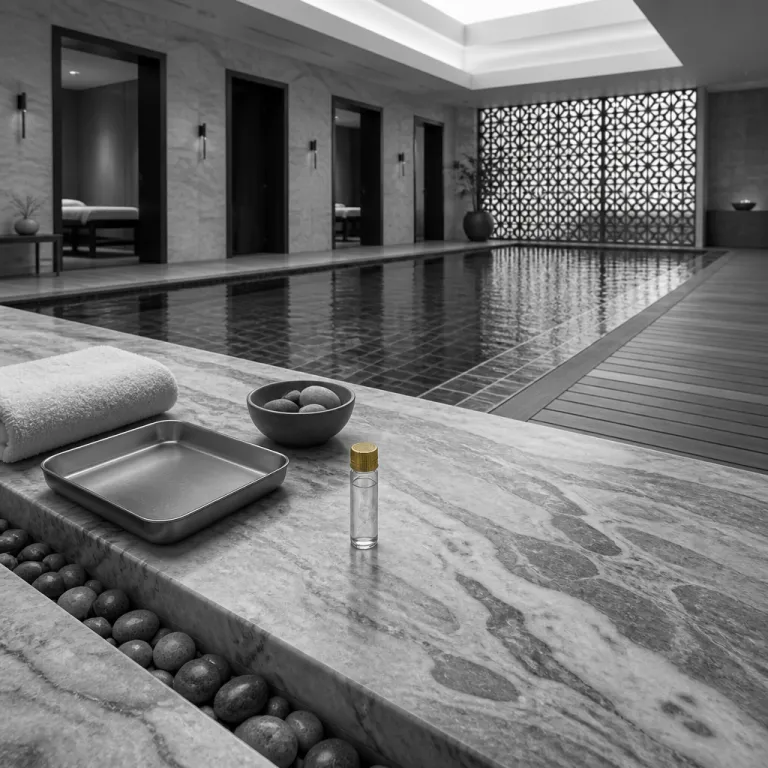
From scented candles to centrifuges: how spas became labs
The shift from wellness as scented oil to wellness as blood panel is happening fastest in the five star hotel spa, not in the hospital. Luxury hospitality executives now talk about a longevity wellness luxury hotel programme 2026 the way revenue managers once spoke about RevPAR, as if a medical wellness roadmap were just another line on the spreadsheet. For Indian guests used to a gentle head massage after a red eye into Europe, the new question is blunt and biological, not poetic.
Global wellness tourism is already measured in hundreds of billions of dollars, and the most ambitious hotels and hotels resorts want a larger slice of that spend. Luxury hotel spas from Mumbai to Marbella are integrating blood sample collection, advanced biomarker analysis and personalised programs into their spa treatments menus, often in partnership with external medical laboratories. The stated aim is noble enough ; to align wellness, longevity and health in one seamless stay, where a spa therapist and a longevity clinic physician supposedly speak the same language.
Reality on the treatment bed feels more complicated, and sometimes more clinical than comforting. When a therapist in a white coat asks you to sign a consent form before your massage, the spa suddenly resembles a wellness clinic more than a sanctuary. Guests who booked a simple aromatherapy session in a Mediterranean resort or on an Indian Ocean island can feel ambushed by a sales pitch for medical diagnostics that will follow them home for months.
Luxury hotel spas are offering blood tests because, as one industry brief puts it, "To provide personalized wellness services and meet guest demand for health optimization." The same material reassures anxious travellers with two more lines that sound like legal boilerplate rather than hospitality ; "Yes, when conducted by qualified professionals following medical guidelines." and "Reputable establishments adhere to strict privacy policies to protect guest information." That is the crux of the discomfort, because a hotel is asking for data that once belonged only in a clinic, yet still wants to sell itself as a carefree retreat.
In the most advanced wellness resort properties, the longevity travel narrative is tightly choreographed. You arrive at the hotel, give a blood sample before breakfast, then meet a medical wellness consultant by lunch to review your markers for inflammation, insulin resistance and biological age. The promise is that these numbers will shape your spa treatments, your nutrition plan and even your sleep schedule for the rest of the stay, and perhaps for the rest of the year.
For some guests, especially those already loyal to brands like Clinique La Prairie, SHA Wellness or Canyon Ranch, this is exactly what they want from luxury travel. They are used to a wellness center that feels like a longevity clinic, with physicians in attendance and a clear line between evidence based treatments and indulgent massages. For others, including many first time Indian travellers to spain or to a European island resort, the sight of diagnostic equipment next to a massage table feels like a bait and switch.
The uncomfortable truth is that hotels are not neutral observers in this shift toward longevity. The global wellness market is enormous, and integrating medical wellness services into a spa allows a hotel to charge far more per night than a traditional five star property with a simple pool and steam room. When a longevity wellness luxury hotel programme 2026 is presented as the new standard of care, it can be hard for guests to tell where genuine health benefit ends and revenue optimisation begins.
For Indian readers who book three or four luxury hospitality stays a year, the question is not whether wellness is desirable. The real question is whether you want your next retreat to feel like a hospital with better linen, or a hotel that respects your right to do nothing more than float in warm water. The answer will determine whether you choose a classic resort spa or a full scale wellness retreat with blood tests on arrival.
Who is asking for all this data, really ?
Hotel executives will tell you that guests are demanding more scientific wellness, more longevity and more measurable health outcomes from every stay. The reality on the ground is subtler, and in many five star hotels the push toward a longevity wellness luxury hotel programme 2026 is coming from the supply side, not the guest side. Wellness consultants, medical partners and global wellness trend reports are driving a narrative that optimisation is the only sophisticated way to travel.
Look at the way some flagship properties frame their new programs. A Mediterranean wellness resort might advertise a seven night longevity retreat that includes genetic testing, continuous glucose monitoring and daily spa treatments calibrated to your cortisol curve. The language is heavy with medical promise, yet the fine print often reveals that the on site wellness clinic is staffed by visiting practitioners on rotation, not by a permanent longevity clinic équipe embedded in the hotel.
Guests from India, especially those used to Ayurveda led stays, are right to ask who is actually accountable for their health once the retreat ends. In Kerala, serious Ayurveda programmes that actually move the needle on chronic issues are clear about medical supervision and about the limits of what a hotel can promise, as explored in this analysis of Ayurveda programmes that genuinely deliver change. By contrast, some European hotels and hotels resorts borrow the vocabulary of medical wellness without matching the depth of clinical oversight, leaving guests with a folder of lab results and no long term plan.
Brands like Aman, SHA Wellness and Clinique La Prairie sit at the more serious end of the spectrum, and they are careful about the line between hospitality and healthcare. At Aman properties that lean into wellness retreat positioning, the spa is still recognisably a spa, even when it offers targeted spa treatments for sleep, stress and metabolic health. The medical components, whether they involve blood tests or imaging, are usually handled in a dedicated wellness center or in partnership with an external wellness clinic, which helps maintain psychological separation between pampering and procedure.
Then there are the aspirants, the hotels that want the halo of longevity travel without the infrastructure. A coastal resort in spain or on a Thai island might suddenly rebrand its existing yoga week as a longevity retreat, adding a basic blood panel and a lecture on blue zones to justify a higher rate. Guests enjoy the same massages and the same buffet, but now with a thin layer of medical language that flatters the idea of optimisation without changing the underlying experience.
For the Indian luxury travel market, which is both data curious and deeply tradition minded, this halfway house can feel unsatisfying. You might be happy to share health information with a serious longevity clinic that has clear protocols, but less willing to hand over your medical history to a hotel whose core competence is still room service. The dataset behind the trend is clear about the tools involved, from diagnostic equipment to data analysis software, yet it says little about how long hotels will store your results or how they will use them to shape future marketing.
There is also a cultural layer that many global wellness consultants underestimate. Guests from Mumbai, Delhi or Bengaluru may be comfortable with preventive check ups in a hospital, but they still expect a hotel spa to feel like a refuge from the city, not an extension of their corporate health screening. When a longevity wellness luxury hotel programme 2026 is sold as a lifestyle upgrade rather than a medical intervention, the risk is that guests sign up for more than they truly understand.
The most honest properties are starting to slow down the hype cycle and invite questions rather than pushing packages. They encourage guests to inquire about available wellness services, to understand privacy policies and to assess their personal comfort with medical procedures before booking. That kind of transparency feels more aligned with the spirit of luxury hospitality than any number of glossy brochures about mind body optimisation.
Relaxation versus optimisation: when your spa feels like a clinic
Walk into the spa at a serious longevity resort and you will notice the difference before anyone mentions blood tests. The scent is subtler, the lighting brighter, the consultation forms longer, and the language shifts from pampering to protocol within a few sentences. For guests who came seeking a retreat from their own calendars, the sudden emphasis on metrics can feel like a corporate offsite for the body.
At properties that fully embrace a longevity wellness luxury hotel programme 2026, the day is often carved into tightly scheduled programs. A typical schedule might include fasting blood work at 07.00, a medical wellness consultation at 09.00, targeted spa treatments at 11.00, a mind body session after lunch and a sleep optimisation workshop in the evening. The intention is to align wellness, longevity and health in a coherent arc, yet the lived experience can resemble a clinic day pass more than a holiday.
There is a reason some of the most interesting retreats are now pushing back against this hyper structured model. Analysts of nervous system travel have pointed out that the most effective wellness retreat formats are prescribing stillness, not detox, as explored in this piece on retreats that prioritise nervous system calm. In that context, a spa that insists on turning every massage into a data point risks missing the deeper human need for unstructured rest, especially for guests who live in high pressure Indian metros.
Consider the contrast between a classic island resort in the Maldives and a full spectrum wellness resort in spain that markets itself as a gateway to blue zones style living. In the Maldives, the spa is still primarily about sensory pleasure, with treatments that reference the sea and the sky more than your biomarkers. In spain, the same ninety minute massage might be framed as part of a longevity retreat protocol, with pre and post treatment blood pressure readings and a recommendation to adjust your supplements.
Neither approach is inherently better, but they serve different psychologies. Some guests enjoy the sense that every hour of their luxury travel is moving a needle on their future health, while others find that the constant emphasis on optimisation erodes the very relaxation they came for. For Indian travellers who already juggle nutritionists, trainers and periodic health checks at home, the idea of turning a holiday into yet another performance review for the body can feel exhausting.
The most sophisticated hotels and hotels resorts are starting to design dual tracks within the same property. One track caters to the data hungry guest who wants a full longevity clinic style workup, complete with advanced blood panels and personalised programs that continue after checkout. The other track preserves a more traditional spa experience, where the only numbers you see are the minutes left in your massage and perhaps the temperature of the plunge pool.
This duality respects the fact that wellness is not a single monolithic desire. A guest might book a medical wellness consultation on the first day, then spend the rest of the stay in the steam room, ignoring every suggestion about intermittent fasting or cold plunges. Another guest might skip the spa entirely and focus on sleep, silence and slow walks, trusting that their mind body system will recalibrate without any need for diagnostics.
For hoteliers, the temptation is to push everyone toward the higher yielding, data heavy packages, because that is where the revenue and the marketing headlines sit. Yet the long term loyalty of discerning guests will depend on something quieter ; the ability to sense when a traveller wants a protocol and when they simply want to be left alone with a book and a pot of tea. In the end, the best wellness retreat experiences are not defined by the sophistication of their lab equipment, but by the sensitivity of their listening.
Where hospitality ends and healthcare begins
The most delicate question in this entire shift toward longevity is not technological but ethical. When a hotel asks for your blood, it is crossing a line that used to separate hospitality from healthcare, and that line is not easily redrawn. For Indian guests used to clear boundaries between the clinic and the club, the new hybrid spaces can feel disorienting.
At the top end of the market, brands like Clinique La Prairie, SHA Wellness and Canyon Ranch have spent decades building medical governance structures to support their wellness clinic operations. Their longevity travel offerings are explicit about the presence of physicians, the scope of medical wellness services and the follow up protocols once you leave the property. In those environments, a longevity wellness luxury hotel programme 2026 is less a marketing slogan and more a codified set of standards that link diagnostics, treatments and long term care.
Other hotels are still catching up, and this is where discerning travellers need to ask sharper questions. Who interprets your blood results, and what qualifications do they hold ; how long will the hotel store your health data, and will it be used to target you with future programs ; what happens if a serious issue is uncovered during a routine spa screening. These are not romantic questions, but they are essential if you are going to let a hotel spa read your biology.
There is also the matter of accessibility and equity, which polite marketing tends to gloss over. The most elaborate longevity retreat packages, especially those that combine medical diagnostics, spa treatments and personalised nutrition, are priced for the ultra rich, often costing more than a small car for a fortnight. For many Indian travellers, even those used to premium hotels, the idea of spending that much on a single wellness retreat raises uncomfortable questions about who wellness is really for.
Some properties are experimenting with more democratic models, offering shorter programs that focus on education rather than intensive testing. A three night stay might include a basic wellness assessment, a couple of targeted spa treatments and group sessions on sleep, stress and nutrition, without the full battery of blood tests. In these cases, the hotel remains primarily a hotel, with wellness as a supportive layer rather than a medical core.
Service culture is another quiet fault line in this new landscape. The invisible craft of a great butler or a seasoned concierge, the kind profiled in this piece on Mumbai’s most polished suite service, is built on discretion, anticipation and a deep respect for guest privacy. When that same ecosystem starts handling your lab reports and medication schedules, the training burden multiplies, and not every hotel brand is ready for that responsibility.
For Indian guests choosing between a classic resort and a full spectrum wellness resort, the decision now carries more weight than thread count or chef pedigree. You are effectively choosing how much of your inner life you are willing to share with a commercial entity, and how much you trust that entity to act as a steward of your health rather than a mere vendor of experiences. The best hotels will earn that trust slowly, through transparent policies, qualified teams and a willingness to say no when a service strays too far into medical territory.
In the end, the most meaningful luxury may not be the latest biohacking gadget or the most intricate longevity programme. It may be the rare hotel that offers you a clear choice between optimisation and ease, between data and silence, and then honours that choice without judgement. That is the kind of luxury hospitality that will still feel relevant a decade from now, when the current longevity fashion has either matured into genuine care or faded like last season’s spa menu.
Key figures behind the rise of medicalised hotel wellness
- The global wellness market has been valued at around 600 billion USD by the Global Wellness Institute, a scale that explains why luxury hotels are racing to integrate wellness, longevity and health into their core offerings.
- Industry analyses project global wellness tourism to exceed roughly 1.3 trillion USD in the mid 2020s, which has encouraged hotels and hotels resorts to develop more ambitious wellness resort concepts and longevity retreat programs.
- Internal hospitality datasets describe an ongoing timeline where hotel spas began adopting medical diagnostics in the early 2020s, with widespread implementation by the middle of the decade as part of broader longevity wellness luxury hotel programme 2026 strategies.
- Operational documents from leading hotel groups highlight three primary objectives for integrating blood testing into spa treatments ; to enhance guest health outcomes, to provide more personalised wellness experiences and to increase revenue through higher value programs.
- Partnership models typically involve external medical laboratories, health technology firms and specialised wellness consultants, reflecting the fact that most hotels do not have in house capacity to run a full longevity clinic or wellness center safely.
- Guest facing guidance now routinely advises travellers to inquire about available wellness services, to understand privacy policies and to assess their comfort with medical procedures before booking, signalling a recognition that spa based diagnostics are not a trivial add on.