The 7 a.m. briefing: where luxury housekeeping standards are set
Walk into a true luxury hotel at 7 a.m. and the quiet drama is already underway. In the back of house, the housekeeping équipe gathers around a whiteboard where the day’s rooms, timings, and special requests are mapped with military precision, because five star hotel cleaning standards are built on this invisible choreography. A good general manager knows the real power sits here, with the director of hotel housekeeping who decides which guest room is turned first, which deep cleaning is postponed, and how to keep consistent cleanliness when occupancy spikes.
At grande dame hotels such as the Taj Mahal Palace in Mumbai or the Oberoi Rajgarh Palace in Rajasthan, this briefing is where standards become action. Supervisors assign 12 to 15 rooms per attendant, aligning with the global benchmark of roughly 30 to 45 minutes of cleaning per room, and they adjust the housekeeping checklist for VIP guests who expect a different level of service and attention detail. Industry training guides from brands such as Marriott and Hilton, as well as union advisory notes from organisations like UNITE HERE, cite similar ranges, and internal productivity reports in large chains often reference the guideline “typically, 12–16 rooms per 8-hour shift” as a hard operational limit that protects quality, guest satisfaction, and the physical health of the housekeeping staff.
Each attendant leaves the room with a tablet or printed checklist that structures their housekeeping practices for the morning. The list covers high touch points, eco friendly cleaning products, and public areas outside the guest rooms that must show the same luxury housekeeping polish as a suite. In the best luxury hotels, this is not bureaucracy; it is quality control in motion, a living document that balances efficiency, deep cleaning cycles, and the emotional nuance of what guests expect from a five star hotel. As one executive housekeeper at a 250-room city property puts it, “Our checklist is less about rules and more about choreography; it keeps every room dancing to the same rhythm.”
From occupied to immaculate: inside a single five star room turn
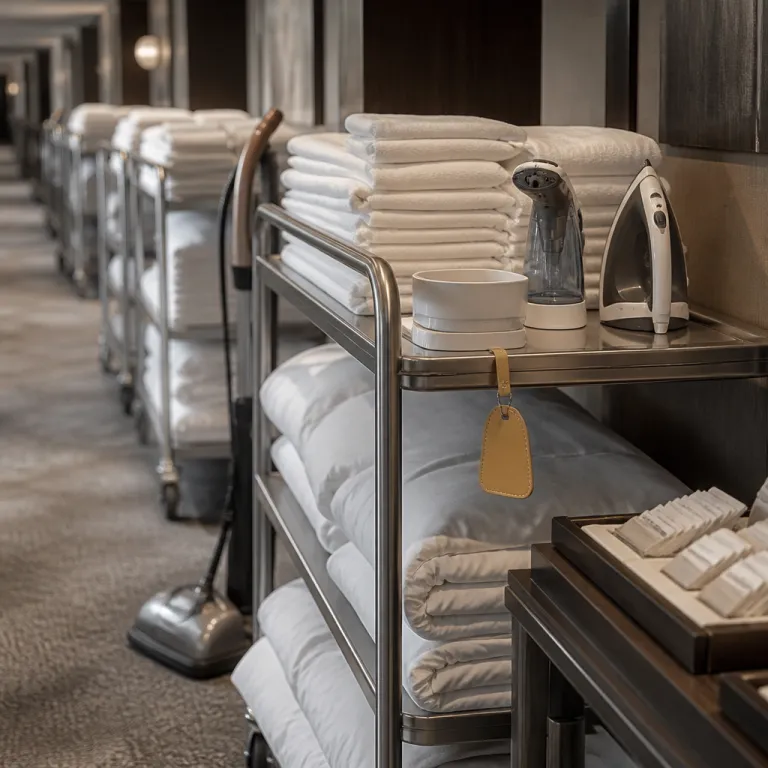
By 8 a.m., the first wave of departures has left for flights, meetings, or a refined city escape at elegant five star hotels in major business and leisure hubs. A room attendant wheels a linen cart into a corridor that still smells faintly of last night’s perfume and room service, then steps into a guest room that must be transformed from lived in to composed in under 40 minutes without compromising luxury housekeeping expectations. The difference between basic cleaning and true five star room care is what happens in those minutes when no one is watching.
The process starts with a rapid inspection of the room and bathroom, a mental triage that decides whether this will be a standard service or a full deep cleaning. Sheets are stripped in a practiced sequence, rubbish is cleared, and high touch surfaces such as switches, remotes, and touch points on handles are wiped with eco friendly products that still meet five star cleanliness standards, because guests expect invisible hygiene rather than harsh chemical scent. Only then does the more meditative work begin, where attention detail turns a generic hotel space into a luxury hotel experience.
Pillows are plumped to a consistent height, amenity bottles are aligned to the centimetre, and the housekeeping checklist ensures no element of the guest experience is left to chance. Temperature is set a degree cooler than the corridor, curtains are drawn to frame the view, and the room is misted with a signature fragrance that signals consistent cleanliness without shouting about cleaning. In the best practices playbook of luxury hotels, this is where quality control meets theatre, and where the standards of hotel housekeeping quietly justify the star rating printed on your booking.
The 200 room ballet: corridors, public areas, and invisible systems
Between 9 a.m. and noon, a grande dame hotel feels almost empty to guests, yet behind every closed door the invisible army is racing the clock. Housekeeping supervisors pace the corridors with tablets, updating room status in housekeeping management software that feeds live data to the front desk, while attendants move between rooms, service elevators, and public areas in a carefully timed loop that keeps luxury hotel cleanliness standards intact. The goal is simple but brutal: turn 200 rooms before noon without a single lapse in cleanliness or service.
Technology is the quiet ally here, especially in large hotels where early check in and late check out requests can derail even the best housekeeping practices. Digital dashboards show which guest has left, which guest room needs deep cleaning, and where maintenance staff must fix a light or a shower before inspection, while another screen tracks eco friendly product usage to meet sustainability goals without compromising quality. In properties that offer seamless arrivals with airport shuttles and coordinated check in windows for business travellers, this data driven coordination is what allows a room to be ready the moment a tired guest steps out of the car.
Yet the real magic lies in the consistency of what guests never see. Public areas such as lobbies, lift banks, and corridors are cleaned in micro shifts, with high touch points polished every hour so that consistent cleanliness extends beyond the guest rooms into every corner of the hotel. When luxury hotels get this right, the guest experience feels effortlessly calm, but behind that calm is a relentless housekeeping checklist, constant inspection, and a culture where quality control is treated as a shared language rather than a policing tool.
Power, craft, and the human cost of invisible perfection
Ask any seasoned general manager who really runs a five star hotel and they will quietly point to the director of housekeeping. This person orchestrates the entire cleaning operation, from deep cleaning schedules to staffing for high occupancy nights, and their decisions shape the luxury hotel housekeeping standards guests experience more than any designer or chef. They manage an équipe that cleans hundreds of rooms per day, yet most guests will never know their name.
The craft is physical, repetitive, and unforgiving, especially in hotels where 560 rooms might be turned daily under tight standards and constant inspection. Internal productivity reports from large chains often cite similar volumes on peak days, and labour studies by hospitality unions regularly warn that pushing beyond these thresholds leads to higher injury rates and lower guest satisfaction. Room attendants bend, lift, and push for an eight hour shift, often handling 12 to 16 rooms while maintaining the same level of luxury housekeeping in the last room as in the first, and turnover in these équipes can be high when pay does not match the demands. Training programmes now emphasise ergonomics, eco friendly cleaning methods, and mental health, but the pressure for consistent cleanliness and guest satisfaction remains intense.
Yet this is also a career path for those who understand service as a craft. The best housekeeping supervisors can read a guest room like a story, spotting patterns in clutter or amenity use that feed into guest preference databases and refine future housekeeping practices. In some luxury hotels, a sharp eyed attendant who shows exceptional attention detail and respect for high touch surfaces will be fast tracked into quality control roles, where they lead inspection rounds and help define best practices that shape the guest experience for years, not just for a single stay.
How to read a room: what discerning guests should look for
When you walk into a five star room, resist the urge to judge it only by size or view. High end housekeeping standards live in the details: the way the curtains fall, the absence of dust on lamp bases, the quiet hum of correctly set air conditioning that keeps the room fresh without feeling clinical. A truly luxury hotel will feel composed rather than merely cleaned, with every element of the guest experience calibrated rather than improvised.
Start with the high touch points that reveal the truth about cleaning and consistency. Run a finger along the remote, check the hairdryer handle, glance at the corners of mirrors and the underside of the vanity, because these are the touch points where rushed housekeeping practices show up first and where consistent cleanliness proves that the housekeeping checklist is more than a formality. In the bathroom, look at grout lines, the back of the door, and the placement of amenities, since luxury housekeeping teams in serious hotels align bottles, fold tissues, and position towels with a level of attention detail that borders on obsession.
Then pay attention to the public areas and how they echo the standards of your guest room. Are lift buttons spotless, are corridor carpets free of crumbs, and does the lobby smell subtly layered rather than aggressively perfumed, as described in essays on service craft where operational discipline outranks design detail? These are signs that hotel housekeeping and quality control are integrated into the hotel’s culture, that best practices are lived rather than laminated, and that the invisible army behind your stay understands luxury not as excess but as the quiet, daily work of making 200 rooms feel freshly minted by noon.
FAQ
How many rooms can a housekeeper realistically clean in one shift ?
In well run luxury hotels, a housekeeper is typically assigned 12 to 16 rooms per eight hour shift, which aligns with the operational benchmark of around 30 minutes of cleaning time per standard room. This range, echoed in training manuals from major hotel groups and referenced in union guidance on safe workloads, allows for consistent cleanliness, proper inspection, and occasional deep cleaning without burning out the équipe. If you hear of hotels pushing far beyond this, expect standards and guest satisfaction to suffer.
What time do five star hotels usually start cleaning guest rooms ?
Most luxury properties begin housekeeping rounds between 7 a.m. and 8 a.m., starting with vacant rooms and early departures. This timing supports the operational goal of turning up to 200 rooms before noon while still leaving capacity for late check outs and special requests. For guests who value uninterrupted mornings, a simple note to the housekeeping team can delay service without affecting overall quality control.
Are guest rooms in luxury hotels cleaned every day ?
Daily cleaning remains the norm in five star hotels, with full service including bed making, bathroom refresh, rubbish removal, and a quick inspection of maintenance issues. Many luxury hotels now offer the option to skip or reduce service for eco friendly reasons, but even then, public areas and high touch points are maintained to the same standards. If you opt out of daily service, you can still request specific housekeeping practices such as towel changes or amenity top ups.
What is the difference between standard cleaning and deep cleaning in a hotel ?
Standard cleaning focuses on visible surfaces, linens, and basic reset of the room, while deep cleaning is a scheduled, more intensive process that targets carpets, upholstery, vents, grout, and less accessible touch points. In serious luxury hotels, deep cleaning cycles are planned through housekeeping management software so that every guest room receives this treatment several times a year without disrupting occupancy. Guests rarely see this work, but they feel it in the overall freshness and longevity of the rooms.
How can a guest quickly judge the housekeeping quality of a five star hotel ?
A fast way is to check three things: the bathroom grout and corners, the condition of high touch items such as remotes and switches, and the cleanliness of public areas like lifts and corridors. Consistent cleanliness across these zones signals strong housekeeping checklist discipline, robust inspection routines, and a culture of best practices. When these details are right, the rest of the guest experience usually follows.