What “heritage hotels Rajasthan” really means when you are paying five star rates
In Rajasthan, the phrase heritage hotels Rajasthan covers everything from serious palaces to themed new builds. A true heritage hotel sits inside an original palace complex, fort, or haveli where the bones are older than your grandparents and the restoration has respected both history and modern comfort. When you book one of these Rajasthan palace hotels, you are paying not just for a room but for access to living royal history that still shapes how the property works today.
By definition, a heritage hotel in Rajasthan operates in a historical building, often a former palace or haveli, and that simple line separates the real thing from the stage set. The state tourism department’s notified list of heritage hotels, updated periodically since the early 2000s, counts around one hundred heritage properties Rajasthan wide in its official classification of heritage hotels, but only a fraction function at a consistent five star level with serious service culture and reliable hardware.1 When you plan a visit Rajasthan circuit, you need to decide where you want an authentic palace hotel and where a lighter category heritage address is enough for one or two nights.
Think of the best heritage stays as a triangle between architecture, service, and sense of place, with Rajasthan India providing the raw material and the operator deciding how hard to lean into each side. Taj Hotels, Oberoi Hotels, and the HRH Group of Hotels have spent decades turning fragile forts and palaces into hotels Rajasthan travellers can actually sleep in without sacrificing hot water or Wi‑Fi, with major restoration phases at flagship properties running from the late 1970s through the 2010s.2 Their work shows how a palace can become a hotel without losing its royal character, while some newer properties simply copy arches and jharokhas and hope you will not look too closely.
The real royal stock: Umaid Bhawan, Rambagh, Samode and Deogarh
Start with the four addresses that define Rajasthan palace hotels for serious travellers who care about provenance. In Jodhpur, Umaid Bhawan Palace is still partly a royal residence, partly a Taj palace hotel, and the suites in the main palace wing give you that long corridor, high ceiling, marble under bare feet feeling that no new build can fake. Within Taj’s categories, look at Palace Rooms and Historical Suites in the central dome wing if you want that experience, and ask for rooms facing the gardens and the bhawan palace dome, because the early morning light over the bagh lawns is half the pleasure.
In Jaipur, Rambagh Palace and Samode Palace sit in different parts of the city yet both anchor the palace Jaipur story in very specific ways. Rambagh, which evolved from a garden house in the 19th century to a royal residence and then a hotel in the 1950s, was once the home of the Jaipur royal family, and its front lawn still hosts polo watching and slow gin and tonics, while Samode’s courtyard and frescoed halls feel more intimate, closer to a grand haveli than a sprawling resort. Deogarh Mahal, between Udaipur and Jodhpur, is rougher around the edges but offers a strong characterful heritage experience, with terraces that look over the town and a sense that the family still lives somewhere just beyond the next carved doorway.
These palaces are not just hotels Rajasthan puts on postcards; they are working heritage hotels where the building’s quirks still shape daily operations, from which shutter sticks in the monsoon to which courtyard catches the evening breeze. When you book a palace hotel like Umaid Bhawan or Rambagh, insist on rooms in the original palace complex rather than later category extensions. At Umaid Bhawan, for example, Palace Rooms and Historical Suites in the main dome wing feel very different from the more conventional garden‑facing rooms, while at Rambagh the Historical Suites and Grand Royal Suites near the central courtyard sit in the oldest mahal palace sections. The difference between a suite in the old palace wing and a newer block is the difference between staying in Rajasthan India and staying in a generic luxury hotel that just happens to have a fort style façade.
Inside the restoration: what Taj, Oberoi and HRH really did to the palaces
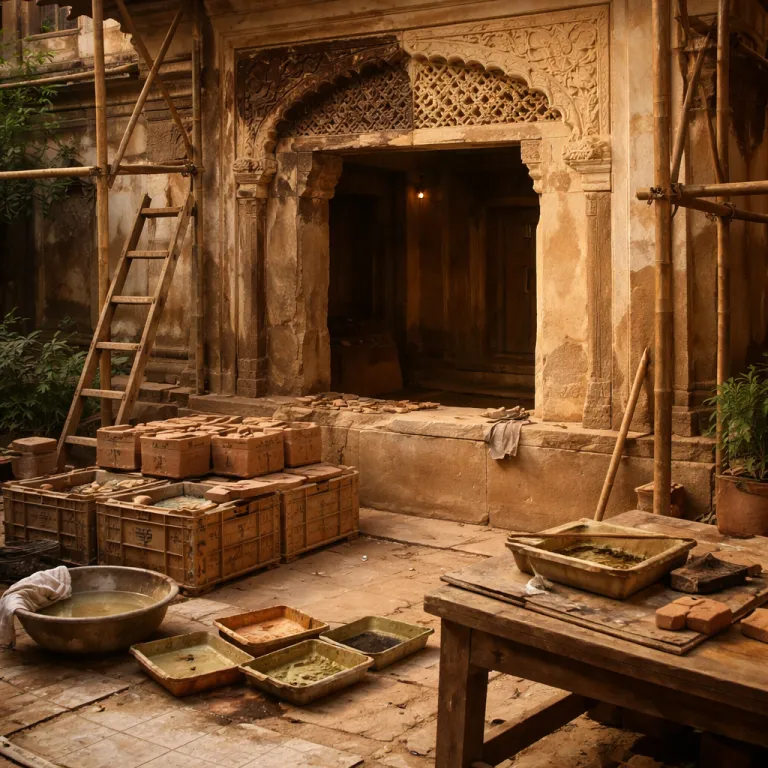
The best Rajasthan heritage hotels guests talk about are the ones where restoration went deeper than repainting domes and adding chandeliers. Taj Hotels and Oberoi Hotels have spent years working with local artisans and government departments to stabilise old stone, rewire entire wings, and integrate air conditioning without shredding the original palace complex proportions, as described in their own restoration notes for properties such as Rambagh Palace, Umaid Bhawan Palace, and The Oberoi Udaivilas, which opened in 2002 with around 87 rooms and suites.2 HRH Group of Hotels, which runs properties like Shiv Niwas and Fateh Prakash in Udaipur, has taken a similar path, turning fragile lakeside palaces into functioning hotels while keeping the city palace skyline intact and gradually increasing key counts to support year‑round operations.3
Walk through Shiv Niwas on the edge of Lake Pichola and you see how a heritage hotel can modernise without losing its royal grammar. Suites open onto curved balconies that still read as part of the original city palace architecture, while bathrooms quietly hide behind thick walls that once housed storage rooms and service corridors. At Raas Devigarh, just outside Udaipur, the restoration stripped a crumbling fort down to its bones and rebuilt it as a minimalist heritage hotel in the early 2000s, a process documented in architectural case studies that show how a fort can be both centuries old and sharply contemporary.4
Across Rajasthan India, this blend of traditional craftsmanship and modern construction has turned many forts and havelis into viable hotels Rajasthan can market year round. The official line from tourism authorities is clear; “Heritage hotels are former palaces and havelis converted into luxury accommodations. Prices vary; some are luxurious, others are more affordable. Do heritage hotels offer modern amenities? Yes, most blend historical charm with contemporary comforts.”1 For you as a guest, that means you can expect hot water, decent pressure, and Wi‑Fi in a niwas palace suite, but you should also expect the occasional quirk, like a slightly uneven floor or a door that needs a firm push.
How to spot an imitation: when “heritage” is just a décor category
Not every property using the phrase heritage hotels Rajasthan has a royal story to back it up. Some hotels in Rajasthan India were built in the late twentieth century with domes, arches, and a token fort style gate, then slotted into a category heritage marketing band that flatters both owner and guest. You can still have a comfortable stay in these hotels Rajasthan offers, but you should know when you are in a real palace and when you are in a palace themed hotel.
There are quick tells once you start to explore the corridors and courtyards. In a genuine palace hotel, circulation is often slightly odd, with staircases that turn sharply, levels that do not quite align, and rooms that feel adapted rather than designed on a grid, while in a new build the layout is usually perfectly regular with long straight corridors and identical doors. Look at the stonework around windows and jharokhas; in an old haveli or fort, you will see variation and hand carved detail, whereas in an imitation the carving often repeats mechanically along the façade.
Location is another clue when you visit Rajasthan and try to read the skyline. A true palace udaipur or palace jaipur usually sits in a historically strategic or ceremonial position, often near a lake, a city gate, or a hilltop fort, while many newer hotels Rajasthan has built in recent decades sit on the highway or in peripheral neighbourhoods with no older structures nearby. When in doubt, ask directly about the building’s history, the age of the niwas or mahal wings, and how long the property has operated as a heritage hotel; evasive answers are a sign you are in a heritage décor category, not a living palace.
Beyond Udaipur and Jaipur: havelis, forts and slow travel circuits
Once you have sampled the big palace hotels Rajasthan is famous for, the real pleasure lies in the smaller havelis and forts that reward slower itineraries. Bundi, Shekhawati, and the countryside between Jodhpur and Jaipur still hold family run heritage hotels where the owner might join you for chai in the courtyard and point out which fresco shows an ancestor meeting a British officer. These are not always five star in the international sense, but they deliver something rarer; a direct line into how Rajasthan India actually lived before tourism.
In Udaipur, beyond the famous lake palace and the polished HRH addresses, you can stay in a converted haveli on the ghats and watch the city palace change colour through the day. Around Jodhpur, smaller forts like Fort Barli and rural niwas properties offer a softer, more agricultural version of royal life, with bagh gardens, village walks, and evenings spent on terraces rather than in marble lobbies. Near Jaisalmer, some heritage hotels sit inside the fort walls, while others spread out in the desert with tented camps that pair well with a night or two in a palace hotel back in the city.
A ten day visit Rajasthan circuit for a discerning traveller might look like this; start with a palace udaipur stay at Shiv Niwas or another HRH niwas palace, move to a haveli in Shekhawati, then a fort near Jodhpur such as Fort Barli, and finish with a night in a tented camp outside Jaisalmer. Along the way, you can compare how different operators handle the category heritage label, from Taj’s Umaid Bhawan to independent mahal palace conversions. If you are torn between a full service palace hotel and a more resort like property on the same trip, it is worth reading a detailed guide on choosing between a five star hotel and a luxury resort before you lock in your bookings.
Service, specific rooms and how to actually book the right palace
In the best heritage hotels Rajasthan offers, service culture matters more than any thread count or marble thickness. Staff continuity is the quiet luxury here; the butler who has worked at Rambagh Palace long enough to know which suites catch the afternoon sun, the housekeeper at Shiv Niwas who remembers which niwas palace suite floods first in a heavy monsoon, the concierge at Umaid Bhawan who can arrange a private museum visit at the city palace.23 When you book, ask how long the core team has been in place, because a stable équipe usually signals a palace that runs on memory rather than manuals.
Room selection is where experienced travellers separate a good stay from a great one. At Umaid Bhawan in Jodhpur, insist on a room in the main palace wing rather than the garden facing category, because the palace complex corridors and original stonework change the entire feel of your stay, while at Rambagh in Jaipur, the Historical Suites and Grand Royal Suites near the central courtyard give you both privacy and proximity to the lawns. In Udaipur, suites at Shiv Niwas that face the lake palace and the city palace skyline are worth the premium, especially at sunrise and sunset when Rajasthan India feels like a film set that forgot to pack up.
When you plan to visit Rajasthan and book multiple heritage hotels, think of your trip as a tasting menu of palace, haveli, fort, and tented camp rather than a repetition of the same category heritage experience. Use one or two big palace hotels Rajasthan is known for, such as Umaid Bhawan or a rajmahal palace style address in Jaipur, then layer in smaller havelis and forts like Fort Barli or a rural bagh estate near Jaisalmer. To secure specific suites or historically significant rooms, email the hotel directly with your preferred room names or numbers and travel dates, refer to the exact category used on the hotel’s own site, and ask for written confirmation before you lock in your bookings. The aim is not to chase the highest category label every night, but to curate a sequence of stays that show you how Rajasthan India lives across palaces, niwas residences, and working villages.
The IHCL SeleQtions question and the future of Rajasthan’s heritage stays
As more travellers search for heritage hotels Rajasthan wide, curated collections like IHCL SeleQtions have stepped in to organise the chaos. Some SeleQtions properties sit in genuine heritage buildings, while others are newer hotels Rajasthan has slotted into a soft brand that promises character without always delivering deep history, a mix that IHCL itself acknowledges in its description of SeleQtions as a portfolio of distinctive hotels rather than strictly palace conversions, with additions to the list announced year by year.2
For a discerning guest, the question is simple; how much curation tips into Disneyfied staging. When a niwas or mahal property starts adding too many staged folk performances, overlit façades, and identikit “royal thali” dinners, you know the experience is drifting away from how Rajasthan India really lives, while a palace udaipur or palace jaipur that keeps the focus on architecture, quiet service, and access to the city palace or fort will age more gracefully. Raas Devigarh is an interesting case study here, because it shows how a fort can be reimagined with contemporary design without losing its structural honesty, a balance that later projects across the state have tried to emulate.4
The future of heritage hotels Rajasthan travellers care about will depend on how owners balance preservation, sustainability, and guest expectations. Demand for experiential travel is rising, and more havelis, forts, and niwas residences will enter the category heritage pool as families look for revenue to maintain their properties. Your role as a guest is to reward the places that treat their palace complex as a long term responsibility, not a short term backdrop, because in the end the real luxury is not the thread count, but the tenth year of polish.
Key figures on heritage hotels and palaces in Rajasthan
- The Rajasthan tourism department reports around 100 heritage hotels operating across the state, a number that reflects both former palaces and havelis converted into hotels Rajasthan can market to international guests, with the notified list revised periodically as new properties qualify.1
- These heritage hotels range from intimate havelis with fewer than 20 rooms to large palace complex properties with more than 150 keys, giving travellers a wide category heritage spectrum from family run niwas residences to full scale palace hotels.
- Conversion of palaces and forts into heritage hotels began in the decades after Indian independence, and continuous operation since then has helped preserve many structures that might otherwise have fallen into disrepair.
- Tourism authorities link the growth of heritage hotels Rajasthan wide to increased demand for experiential travel, noting that heritage tourism now represents a significant share of high end overnight stays in Rajasthan India and contributes materially to local employment.1
- Restoration projects typically combine traditional craftsmanship from local artisans with modern construction techniques, a blend that allows fragile forts and palaces to function as safe, year round hotels while retaining their original character.
FAQ about heritage hotels and palaces in Rajasthan
What is a heritage hotel in Rajasthan ?
A heritage hotel in Rajasthan is a hotel operating in a historical building, often a former palace or haveli, that has been restored to offer modern comforts while preserving original architecture and a sense of royal history.
Are heritage hotels in Rajasthan always expensive ?
Prices at heritage hotels Rajasthan wide vary significantly, with some palace hotels like Umaid Bhawan and Rambagh Palace charging top tier rates, while smaller havelis and forts in towns such as Bundi or Shekhawati offer more affordable stays with simpler service and facilities. As a rough guide, expect everything from mid range nightly rates at family run havelis to premium pricing at flagship palace conversions during peak season.
Do heritage hotels in Rajasthan offer modern amenities ?
Most heritage hotels in Rajasthan India blend historical charm with contemporary comforts such as air conditioning, hot water, Wi‑Fi, and modern bathrooms, although you should expect occasional quirks due to the age and layout of the original palace or haveli structures.
How far in advance should I book a palace hotel in Rajasthan ?
For peak travel periods and high demand properties like lake palace style hotels in Udaipur or major palace jaipur addresses, it is wise to book several months ahead, especially if you want specific suites in the original palace complex rather than newer wings. Shoulder season stays at smaller havelis and forts can often be secured closer to your visit Rajasthan dates, but festival periods still sell out quickly.
What is the best way to plan a heritage focused itinerary in Rajasthan ?
A balanced itinerary usually combines one or two major palace hotels Rajasthan is known for with smaller havelis, a rural fort, and possibly a tented camp near Jaisalmer, giving you a mix of royal architecture, village life, and desert landscapes within a single visit Rajasthan journey.
Sources
- Rajasthan Tourism Department (heritage hotel classification, notified heritage hotel list and official descriptions of heritage properties)
- Taj Hotels and IHCL (Umaid Bhawan Palace, Rambagh Palace, The Oberoi Udaivilas, IHCL SeleQtions portfolio and published restoration notes)
- HRH Group of Hotels (Shiv Niwas Palace, Fateh Prakash Palace and City Palace Udaipur conservation and adaptive reuse work)
- Raas Devigarh (architectural restoration case studies and project documentation from the early 2000s conversion)